


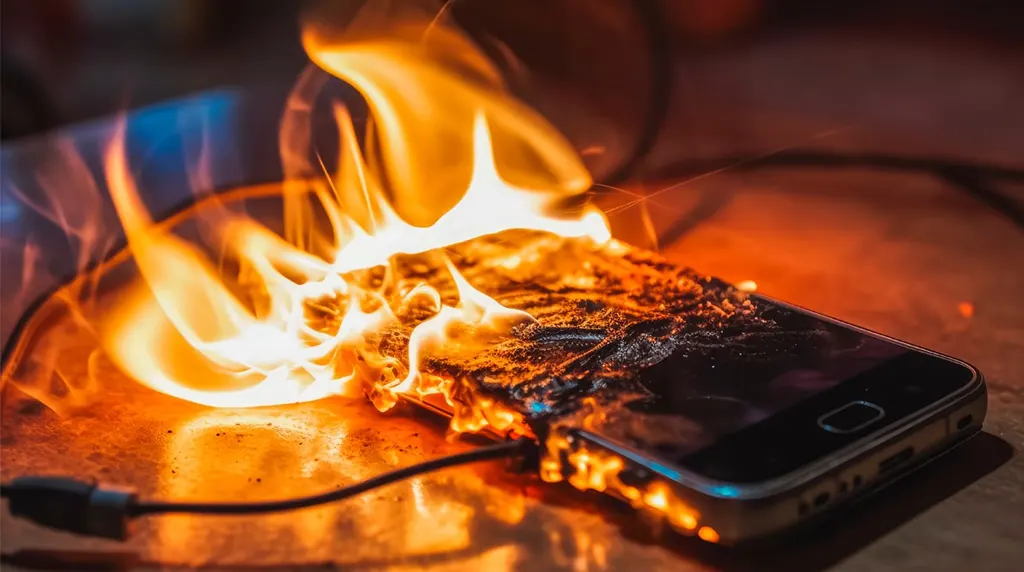
As lithium-powered devices become part of everyday life, fire safety professionals have been forced to confront a new category of risk. Across fire brigades, standards bodies, and safety engineering disciplines, there is growing agreement on one point:
Lithium battery fires behave differently from traditional fires — and they require different thinking.
This article summarizes what fire safety experts consistently emphasize when discussing lithium battery fire risk, response, and prevention.
1. Lithium Battery Fires Are Not “Normal” Fires
Fire investigators and safety engineers widely note that lithium battery fires:
- Can start without an external flame source
- May escalate rapidly once thermal runaway begins
- Often reignite after appearing extinguished
Experts emphasize that traditional visual cues — such as flames going out — do not reliably indicate that the hazard has ended.
2. Thermal Runaway Is the Core Risk
Across professional literature and training, thermal runaway is consistently identified as the defining danger.
Experts explain that:
- Heat generated inside a failing cell accelerates further failure
- Adjacent cells may ignite sequentially
- Suppression of external flames does not necessarily stop internal reactions
This is why battery fires can flare up again minutes or hours later.
3. Cooling Matters as Much as Flame Suppression
Fire safety professionals frequently stress that:
- Stopping visible flames is only one objective
- Reducing internal temperature is critical
- Incomplete cooling increases re-ignition risk
Experts caution against assuming that smothering alone is sufficient, particularly for enclosed or multi-cell batteries.
4. Early-Stage Intervention Is Key
One of the strongest points of agreement among experts is the importance of early response.
Small, localized incidents:
- Are easier to control
- Generate less internal heat
- Are less likely to propagate between cells
Once a battery fire has fully developed, options become limited and evacuation is often the safest response.
5. Ventilation and Toxic Smoke Are Major Concerns
Fire brigades consistently warn that lithium battery fires can release:
- Dense smoke
- Irritating or toxic gases
- Combustion byproducts that linger after flames subside
Experts advise:
- Avoiding inhalation
- Maintaining distance when possible
- Treating smoke as hazardous even after visible fire is suppressed
6. No Single Tool Solves the Problem
A recurring theme in expert guidance is that:
- No single extinguisher, blanket, or suppressant eliminates all risk
- Each tool addresses only part of the problem
- Layered safety approaches are more effective
Fire safety professionals recommend combining:
- Prevention
- Early detection
- Appropriate response tools
- Clear evacuation plans
7. Standards Are Still Catching Up
Experts openly acknowledge that:
- Many existing fire safety standards were developed before widespread battery use
- Lithium battery fire behavior is still being studied
- Certification frameworks are evolving, not complete
This does not mean products are unsafe — it means expectations must be realistic and claims carefully framed.
8. Education Is as Important as Equipment
Fire safety professionals consistently emphasize that:
- Misunderstanding battery fire behavior increases risk
- Users may act too late or with the wrong assumptions
- Clear guidance improves outcomes more than equipment alone
Knowing what not to expect can be as important as knowing what to do.
What Experts Do Not Claim
Equally important is what experts avoid saying:
- They do not claim any consumer product “solves” battery fires
- They do not guarantee prevention of re-ignition
- They do not recommend treating battery fires casually
This restraint reflects the complexity of the risk.
What This Means for Homes and Workplaces
Expert consensus suggests that modern fire safety planning should:
- Acknowledge the unique nature of battery fires
- Prepare for early-stage response
- Expect unpredictability
- Emphasize monitoring after suppression
- Combine multiple safety measures
Preparedness, not perfection, is the goal.
Final Thoughts
Fire safety experts agree on one thing: lithium battery fires demand informed, realistic, and cautious responses.
Understanding their behavior — rather than relying on outdated assumptions — leads to safer decisions, better planning, and reduced risk.
About ZUFF
ZUFF develops compact fire suppression solutions designed to help manage small, early-stage lithium battery incidents.
ZUFF products are intended to complement traditional fire safety equipment, not replace certified extinguishers or emergency services, and are developed with expert-informed understanding of modern fire risks.