


Lithium-ion batteries power modern life — from smartphones and laptops to e-bikes, power tools, and home energy devices. But as battery use increases, so do small, fast-developing battery fires, often in homes, cars, and enclosed spaces.
Many people assume that a traditional fire extinguisher is the best line of defense. In reality, standard extinguishers are often poorly suited for small battery-related fires — and in some cases, can create additional risks.
This article explains why conventional extinguishers frequently underperform in small battery fire scenarios, and what this means for everyday fire safety planning.
Understanding Small Battery Fires
Small battery fires typically involve:
- Lithium-ion or lithium-polymer cells
- Thermal runaway events (rapid heat release)
- Intense localized flames
- Re-ignition risk after initial suppression
These fires behave very differently from:
- Paper or wood fires
- Cooking oil fires
- Electrical wiring fires
They are often:
- Sudden
- Highly localized
- Short in duration, but intense
- Occurring indoors or in vehicles
This matters because most fire extinguishers were designed decades ago, long before consumer battery density reached today’s levels.
How Traditional Fire Extinguishers Are Designed
Most household fire extinguishers fall into three categories:
1. Dry Powder (ABC) Extinguishers
- Designed for Class A, B, and C fires
- Discharge fine powder under high pressure
Limitations for battery fires:
- Powder does not cool battery cells effectively
- High discharge force can scatter burning material
- Leaves corrosive residue that damages electronics
- Poor visibility during use
2. CO₂ Extinguishers
- Designed mainly for electrical fires
- Displace oxygen around the flame
Limitations for battery fires:
- Minimal cooling effect on battery cells
- Fire may re-ignite once CO₂ dissipates
- Requires close proximity and correct angle
- Ineffective outdoors or in ventilated spaces
3. Water or Foam Extinguishers
- Effective on Class A fires
- Cooling-based suppression
Limitations for battery fires:
- Not suitable for energized devices
- Risk of electrical shock
- May not penetrate battery casing effectively
- Not recommended for lithium battery incidents unless specifically rated
Why These Extinguishers Often Fail Small Battery Fires
1. Battery Fires Are Self-Sustaining
Lithium-ion batteries generate their own oxygen internally during thermal runaway.
This means:
- Oxygen-displacement methods (like CO₂) are often insufficient
- Flames may reappear after initial suppression
2. Cooling Is More Important Than Smothering
Traditional extinguishers focus on:
- Removing oxygen, or
- Interrupting combustion
Battery cells, however, require rapid localized cooling to slow or stop thermal propagation between cells — something many general-purpose extinguishers are not optimized for.
3. High-Pressure Discharge Can Make Things Worse
Many extinguishers:
- Release contents at high pressure
- Can knock over burning devices
- Can spread burning debris or electrolyte
In confined spaces like kitchens, garages, or vehicles, this can increase risk rather than reduce it.
4. Re-Ignition Risk Is Common
Even after flames appear suppressed:
- Battery cells may remain above critical temperature
- Re-ignition minutes later is well documented
Traditional extinguishers rarely address this lingering heat effectively.
Human Factors: Why Extinguishers Are Often Misused
Beyond technical limitations, real-world usage matters:
- Many people do not know how to operate an extinguisher correctly
- Extinguishers are often stored out of reach
- Panic reduces correct application
- Users may hesitate due to size, weight, or force
In battery fire scenarios, seconds matter — complexity reduces effectiveness.
Rethinking Fire Safety for Battery-Powered Environments
This does not mean traditional fire extinguishers are useless. They remain essential for many fire types and are required by safety regulations.
However, modern environments increasingly require:
- Faster response tools
- Lower-force application
- Non-toxic, residue-minimal solutions
- Products designed specifically for small, early-stage incidents
Fire safety planning should consider layered protection, not reliance on a single legacy tool.
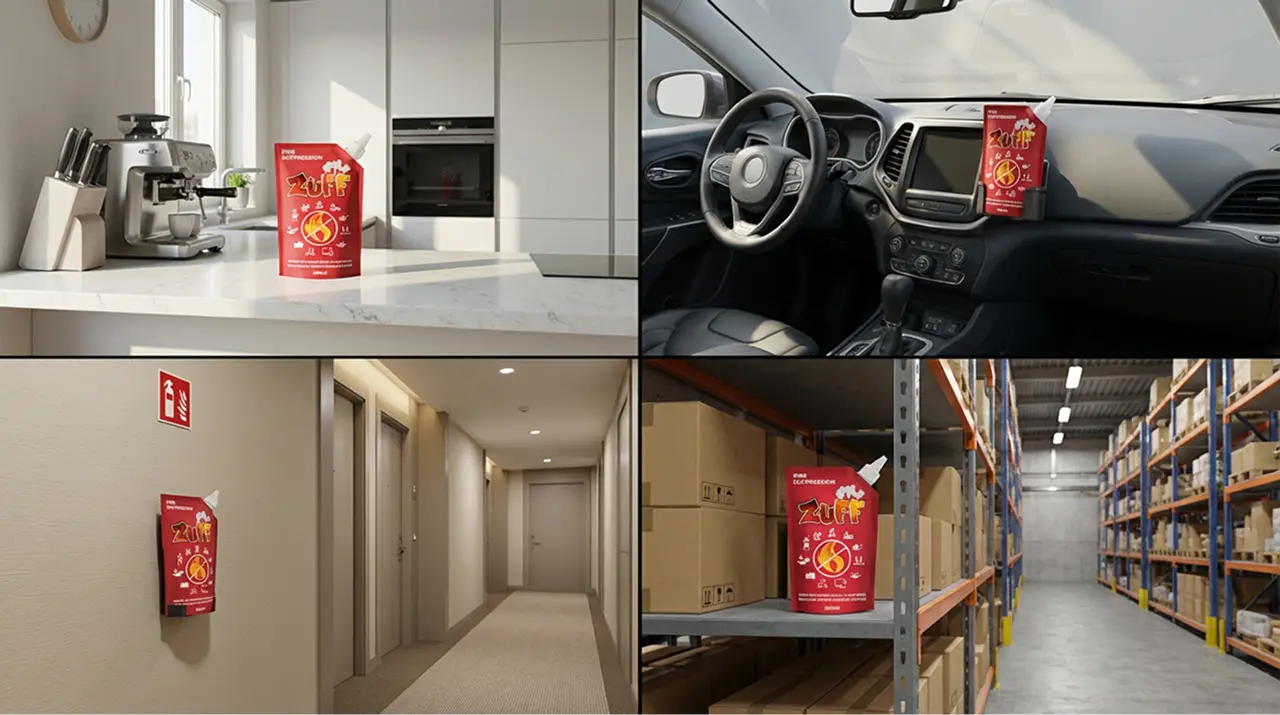
What This Means for Homes, Vehicles, and Workspaces
Battery fires most commonly occur:
- During charging
- In vehicles
- Near workbenches or tools
- In storage areas with multiple devices
In these settings, early intervention is critical. The sooner heat and flame are addressed, the lower the risk of escalation.
Final Thoughts
Traditional fire extinguishers were never designed with modern battery technology in mind. While they remain important safety devices, they often struggle with the unique characteristics of small battery fires — particularly cooling, re-ignition control, and ease of use.
As battery-powered devices continue to proliferate, fire safety approaches must evolve accordingly.
Understanding the limitations of existing tools is the first step toward building safer homes, vehicles, and workplaces.
About ZUFF
ZUFF develops compact fire suppression solutions designed to help address small, early-stage fires in modern, battery-powered environments.
Our products are intended to complement, not replace, existing fire safety equipment.