


ZUFF for Workshops, Generators & Diesel Fire Risks
Simple fire protection for life on the move
Camping trips, boats, and gas-powered equipment bring freedom — and a different kind of fire risk. Open flames, portable gas canisters, fuel lines, and enclosed spaces mean fires can escalate quickly if they’re not addressed immediately.
ZUFF is designed to be a compact, easy-to-use fire suppression solution that fits naturally into mobile and outdoor environments — without pressure, complexity, or specialist training.
Common fire risks when camping, boating, or using gas
These environments often involve:
- Gas stoves, BBQs, and camping burners
- Fuel or gas leaks near ignition sources
- Enclosed or semi-enclosed spaces (cabins, tents, vans, boats)
- Limited access to traditional fire safety equipment
- Conditions where aerosol discharge can be unsafe
Simple fire protection where risk is higher
Workshops, generators, and diesel-powered equipment bring practical fire risks into everyday environments. Heat, fuel, electricity, and mechanical friction often operate side by side — and when something goes wrong, there’s little time to react.
ZUFF is designed to be a compact, easy-to-use fire suppression solution that can be kept close to risk areas and used immediately, without pressure, complexity, or training.
The reality of workshop and generator fire risks
In workshops and equipment spaces, fires often start small but escalate quickly. Common scenarios include:
- Diesel or fuel vapours igniting near hot surfaces
- Portable or standby generators overheating
- Electrical faults in tools or wiring
- Oil, grease, or residue catching fire
- Confined spaces where visibility and control matter
In these situations, traditional extinguishers are often stored too far away, while pressurised aerosol products can feel forceful, unpredictable, or uncomfortable to use.
How ZUFF helps
Controlled, non-pressurised use
ZUFF is not pressurised. It’s applied manually, giving the user control and confidence when it matters.
There’s no blast effect, no sudden discharge, and no need to commit to a full release — making it easier to respond calmly around equipment, fuel, and enclosed spaces.
Safer handling around diesel and machinery
Because ZUFF does not rely on propellants:
- There’s no risk of can rupture under heat
- No uncontrolled spray or kickback
- Application can be stopped instantly if conditions change
This makes it particularly suited to environments involving generators, engines, and diesel-powered equipment.
Simple by design
ZUFF is designed for people, not professionals.
There’s:
- No pin to pull
- No pressure gauge to check
- No training required
If a fire starts, you open the pouch and apply it directly to the source — fast, intuitive, and accessible.
ZUFF vs aerosol fire extinguishers
Aerosol extinguishers can appear convenient, but their pressurised discharge and forceful spray can be difficult to manage around fuel or machinery.
ZUFF offers a calmer, more controlled alternative.
| ZUFF | Aerosol Extinguishers | |
|---|---|---|
| Pressurised | No | Yes |
| Controlled application | Yes | Often forceful |
| Risk of rupture | No | Possible |
| Suitable for confined spaces | Better suited | Limited |
| Ease of use | Very simple | Can feel intimidating |
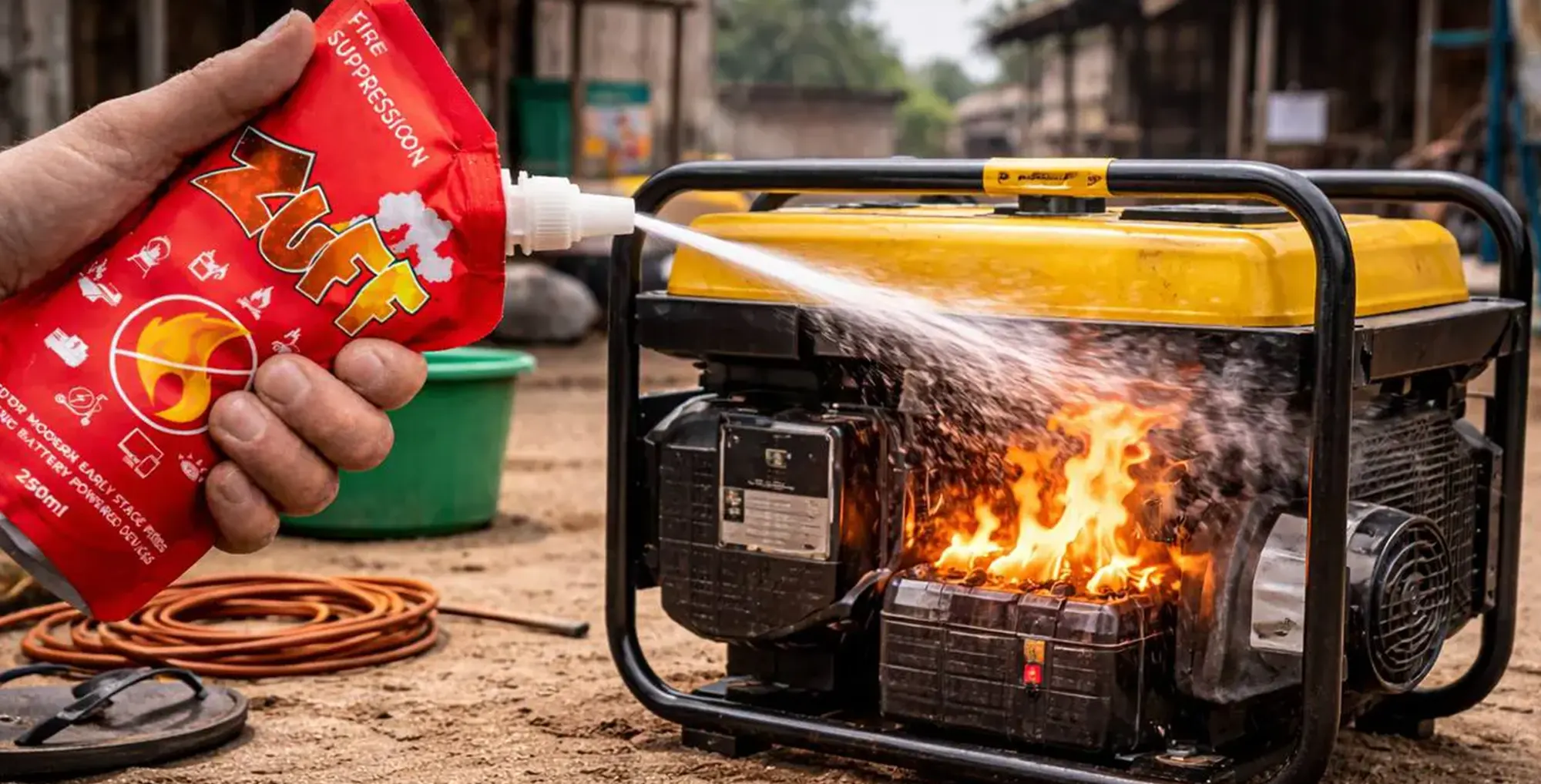
Designed to be kept close
ZUFF is compact, lightweight, and easy to store — which means it can live next to the risk, not hidden away.
Ideal locations include:
- Workshop walls or benches
- Generator housings or sheds
- Garages and service areas
- Equipment storage spaces
When fire safety is accessible, response is faster.
A practical layer of fire safety
ZUFF is intended as a fire-suppression aid for early-stage fires. It’s designed to complement existing fire safety measures and help people respond quickly while following local fire safety guidance.
Why ZUFF makes sense for workshops and generators
- Designed for real-world equipment and fuel risks
- Easier and less intimidating than traditional extinguishers
- A safer-feeling alternative to pressurised aerosols
- Compact enough to stay where it’s needed most